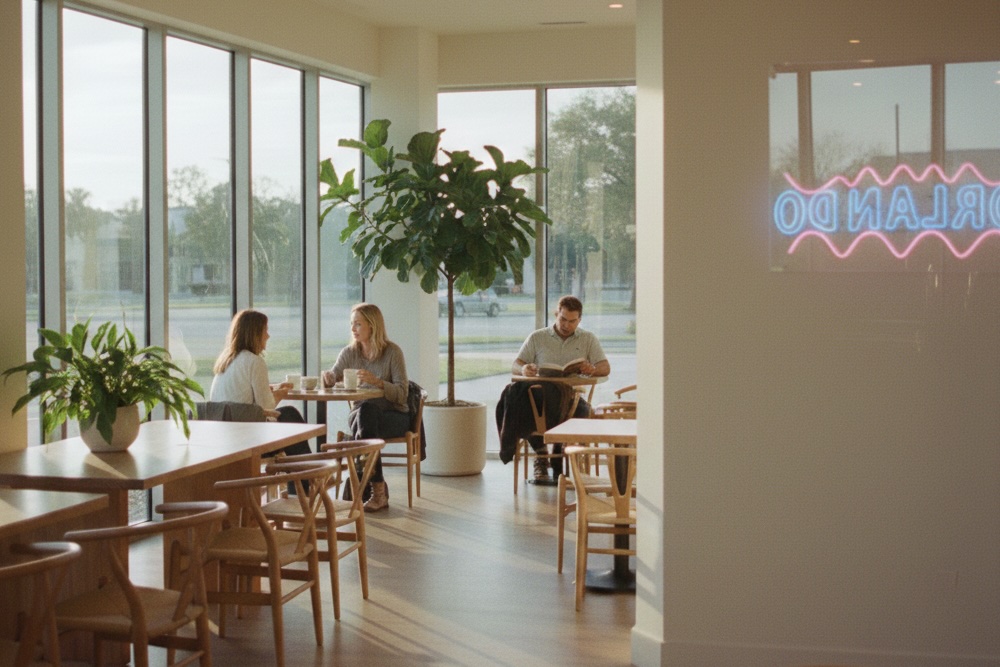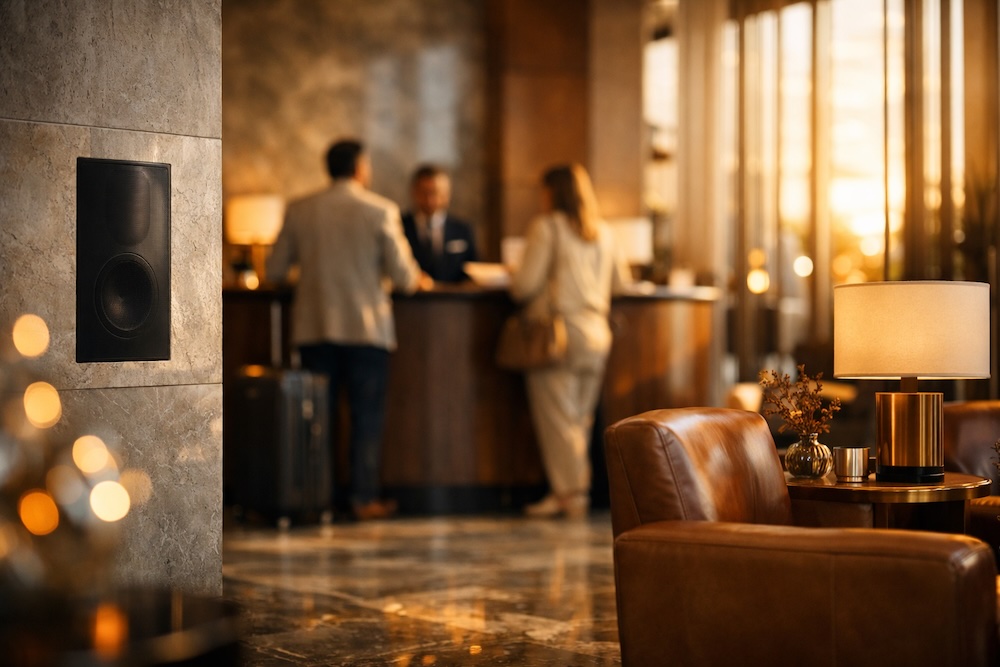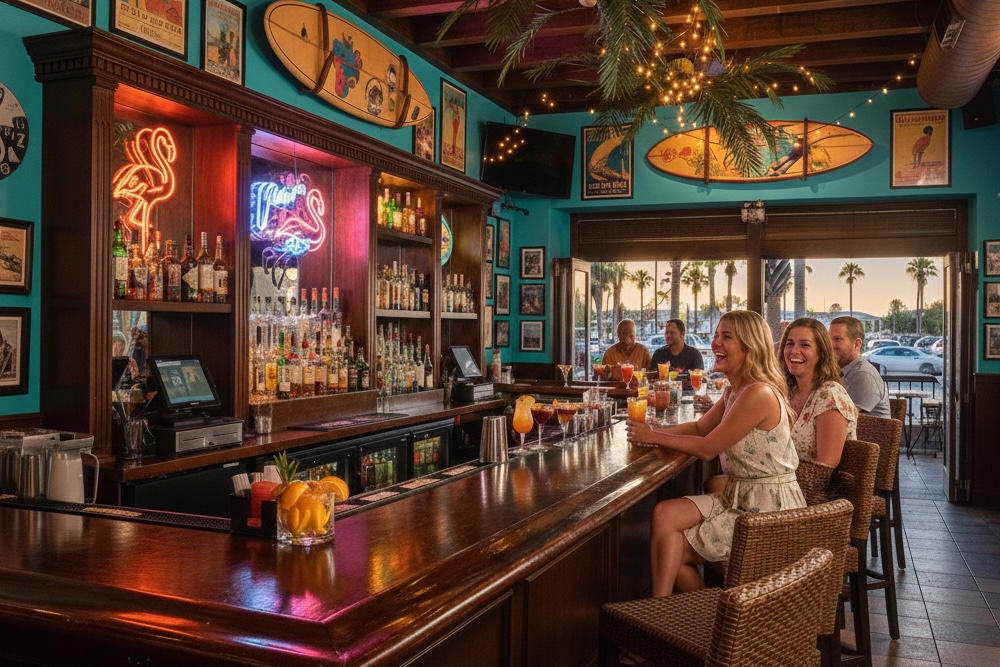
A good bar has a heartbeat. You feel it before you taste the first drink. The lights are right. The staff moves with purpose. The room has energy, but it’s not chaotic. That’s exactly where background music for bars does its best work. It sets the emotional temperature, then it keeps it steady.
We made two albums for that job. Bar Pulse (Background Music For Bars) is built for modern bar flow. Pub Groove (Background Music For Pubs) is built for warm, social pub nights. Both are royalty-free tracks from us, written for business use. No chasing playlists. No random mood swings mid-shift. Just a sound you can make yours.
If you want a quick way to preview everything, drop your Spotify iframe embed under this intro. Let guests and staff hear it in context. The room will tell you what fits.
Why music changes the room before anyone orders
People don’t “think” their way into comfort. They feel their way into it. Music is one of the fastest signals your bar sends because it lands under everything else. It sits under the door opening. It sits under laughter. It sits under the bartender sliding a glass across the bar.
Tempo is the obvious lever, but it’s not the only one. The way a rhythm repeats creates stability. When the beat is steady, the room feels managed. That matters more than most owners realize because bars are full of tiny uncertainties. Where should I sit. Is it okay to stand here. Is it too loud to talk. Music answers those questions without words.
Tone and texture matter, too. Warm tones make a room feel closer. Cleaner tones make it feel more open. You can use that to guide behavior without pushing people around. That’s the sweet spot for bar music. The soundtrack should shape the night while still letting guests feel like it was their idea.
What recent data says about the bar business and the power of atmosphere
Bar owners are dealing with tough math. Costs climb, and guests still expect a great night. In Bar & Restaurant’s State of the Industry Survey, rising costs were the top challenge at 43%. The same survey found service was the biggest driver of an unforgettable guest experience at 56%, more than double food and drink quality at 25%. That tells us something important. Anything that helps the staff deliver a calmer, smoother experience has real value.
Then there’s the buying behavior side. NielsenIQ’s on-premise analysis on music-led occasions reported that in Australia, 57% of consumers said they were more likely to try a new drink at a music event than during a regular night out, and it also reported that average category repertoires increased by 6% for event-driven visits compared to routine visits. Translation. When the vibe feels like an “occasion,” people get curious. They experiment. They come back.
Here’s a simple way to look at those numbers without getting lost in spreadsheets.
| Signal | What it means on a Friday night | What we do with Bar Pulse and Pub Groove |
|---|---|---|
| Rising costs are the top headache (43%) | You need improvements that don’t require new equipment | Music changes the full room with one decision |
| Service drives guest experience most (56%) | Staff stress shows up in guest mood | We write tracks that support a steady pace and calmer energy |
| “Occasion” energy increases drink experimentation | The right vibe can push second rounds and new picks | We score the night by moment so the room feels intentional |
| Guests respond to environments that feel curated | Random playlists can break trust | Two albums with a consistent sound helps your brand feel consistent |
Loud does not equal lively
Some bars crank volume because they want energy. We get it. Noise feels like proof that the place is busy. The problem is that volume can turn from “fun” to “fatiguing” fast, especially when it forces guests to shout. Shouting shortens conversations. Shorter conversations shorten stays.
A systematic review in PLOS ONE (indexed in PubMed) looked at 37 studies with 16,843 participants and found that musical characteristics like low frequencies, high groove, and higher tempo can increase movement and lift emotions. It also noted that extremely high sound levels, like those found in nightclubs, were considered unnecessary and could cause discomfort. That’s a polite way of saying people leave when their ears hurt.
So we write music that feels “full” at reasonable volume. You get energy without punishing conversation. That matters in a pub where talking is the point, and it matters in a bar where ordering clearly keeps the line moving.
How we write music for bar psychology
When we write for hospitality, we think about friction. Where do guests hesitate. Where does staff get slammed. Where does the room get messy. Music can’t fix staffing or layout, but it can smooth the edges.
We focus on groove that stays consistent. Not boring. Consistent. Consistency helps guests relax because it signals that the environment is under control. We also avoid sharp “look at me” moments. Big drops and dramatic switch-ups can be fun in headphones. In a bar, they interrupt conversation and break the spell.
We also build space into the music. You should be able to talk over it without fighting. That’s why our tracks don’t chase the spotlight. The room is the star. Your guests are the star. Our job is to support the night so it feels easy.
That’s the difference between music that exists and music that works.
Two albums built for two kinds of nights
Pub Groove (Background Music For Pubs) is our warmer set. It fits regulars, pints, and conversations that stretch longer than planned. If you want background music for pubs that feels social and familiar, this album stays in that lane. It’s upbeat without being pushy, and it’s smooth enough to run for hours.
Bar Pulse (Background Music For Bars) is the more modern, clean-energy set. It fits cocktail bars, sports bars, hotel bars, and lounges that need a steady lift through peak hours. If you’re looking for background music for bars that feels current and confident, this album keeps the room moving while still leaving air for talk.
We’re based in Orlando, but we didn’t write these like “local music.” We wrote them like human music. The emotional cues work in any city because the goal is universal. People want to feel welcome, energized, and comfortable spending their time and money with you.
A shift plan your manager can actually use
Most music plans fail because they’re too complicated. Staff gets busy, then the plan disappears. We like a simple “moments” approach. You pick the moment you’re in, then you pick the track that matches it.
| Moment | What you want guests to feel | Tracks that fit |
|---|---|---|
| Doors just opened | Welcome, curiosity, confidence | Doors Open, Warm Welcome |
| The first wave hits | Light lift, easy ordering | Happy Hour Flow, Backbar Glow |
| The room is packed | Energy with control | Crowd Lift, Crowd Swing |
| Sports are on | Fast pulse without chaos | Sports Bar Pulse, Game Night Beat |
| Late cocktails and whiskey | Smooth, a little moodier | Whiskey Lounge, Stirred Smooth |
| Last stretch | Calm landing, clean close | Late Night Easy, Last Call Ease |
That table is the “manager version.” Below is the “owner version,” where we explain what each cue is doing psychologically, without turning it into a textbook.
The 12 cues we built to carry the night
You’re planning to embed the full song list in Spotify. Perfect. In the article itself, we like a tighter set that makes decisions easier. These are twelve tracks we reach for most because each one has a clear job.
| Album | Track | Length | Best moment | The psychological job |
|---|---|---|---|---|
| Pub Groove | Warm Welcome | 3:52 | Opening | Turns “new place” nerves into comfort |
| Pub Groove | Backbar Glow | 3:26 | Early rush | Adds momentum while staying friendly |
| Pub Groove | Stirred Smooth | 3:21 | Steady mid-shift | Keeps the room relaxed and social |
| Pub Groove | Terrace Air | 2:53 | Outdoor sections | Feels airy and light without fading out |
| Pub Groove | Game Night Beat | 3:03 | Sports | Supports excitement without getting harsh |
| Pub Groove | Last Call Ease | 3:26 | Close-down | Softens the landing so guests leave happy |
| Bar Pulse | Doors Open | 2:23 | Opening | Sets a confident tone fast |
| Bar Pulse | Happy Hour Flow | 4:05 | Build to peak | Holds energy steady as the room fills |
| Bar Pulse | Cocktail Craft | 3:46 | Cocktail pacing | Feels polished and intentional |
| Bar Pulse | Sports Bar Pulse | 2:12 | Sports | Quick lift that keeps orders moving |
| Bar Pulse | Whiskey Lounge | 4:05 | Late night | Warmer, deeper feel for longer stays |
| Bar Pulse | Conversation Space | 3:37 | Talk-forward zones | Makes the bar feel full without stealing attention |
If you want a simple test, start with only these twelve for one week. It keeps the sound consistent, and it makes feedback easier because you’re not changing twenty variables at once.
Album runtime facts you can plan around
Owners ask us how long the music runs because looping matters. We pulled these totals directly from the track lengths you provided.
| Album | Tracks | Total runtime | Average track length | Shortest track | Longest track |
|---|---|---|---|---|---|
| Pub Groove | 12 | 36:29 | 3:02 | Pint Time (1:57) | Warm Welcome (3:52) |
| Bar Pulse | 12 | 36:53 | 3:04 | Wine Bar Paris (1:51) | Whiskey Lounge (4:05) |
That means you can run a full album set, then swap to the other album before people notice repetition. It also means your staff can learn the flow quickly because the “chapters” are predictable.
Why royalty-free matters to bar owners who hate surprises
A lot of music stress comes from not being in control. Someone changes the playlist. A platform pushes a random recommendation. The vibe shifts, and you can’t explain why the room suddenly feels off.
With our royalty-free music, you’re not paying us per play to use these tracks. You can build a house sound and keep it consistent. You can train your team to treat music like part of operations, not an afterthought. When you run a busy bar, that consistency shows up as confidence. Guests feel it even if they never mention it.
One practical note. Licensing rules for public performance vary by country and venue. We’re not your attorney, so we’re not giving legal advice here. We are saying this: when your music is predictable and purpose-built for bars and pubs, you remove one more source of chaos from the night.
A one-week rollout that keeps it simple
Day one is a baseline. Keep whatever you usually play, but pay attention. Notice when guests get louder. Notice when orders slow down. Notice when the room feels jumpy. Write those times down. Two minutes of notes beats “I think it was fine.”
Days two through four, run Pub Groove during your earlier hours, then switch to Bar Pulse as you build toward peak. Don’t touch the volume once it’s set unless staff is struggling to hear orders. Consistency matters if you want honest feedback.
Days five through seven, keep the same plan, but rotate in the tracks that match your concept most. If you run a sports-heavy pub, you’ll lean more on Game Night Beat and Sports Bar Pulse. If you run a cocktail-forward bar, you’ll live in Cocktail Craft and Whiskey Lounge. Keep it intentional, and the room will feel intentional.
At the end of the week, ask two questions. Did staff feel the rush was easier. Did guests stay longer or order differently. You don’t need a perfect answer. You’re just looking for signal.
Put the music to work tonight
If your bar already has good drinks and good people, you’re halfway there. Music is the part that stitches the night together. It can make a slow room feel inviting. It can make a packed room feel controlled. It can make a “one and done” guest stay for another round.
Add your Spotify iframe below, press play, and picture your busiest shift. That’s the test that matters. If you want us to help you pick a tight sequence from Bar Pulse and Pub Groove for your exact vibe, tell us what kind of bar you run and when your peak hits. We’ll map the soundtrack to the night you’re trying to create.
Stream free from:
- Spotify: Bar Pulse, Pub Groove
- Apple Music: Bar Pulse, Pub Groove
- YouTube: Bar Pulse, Pub Groove